


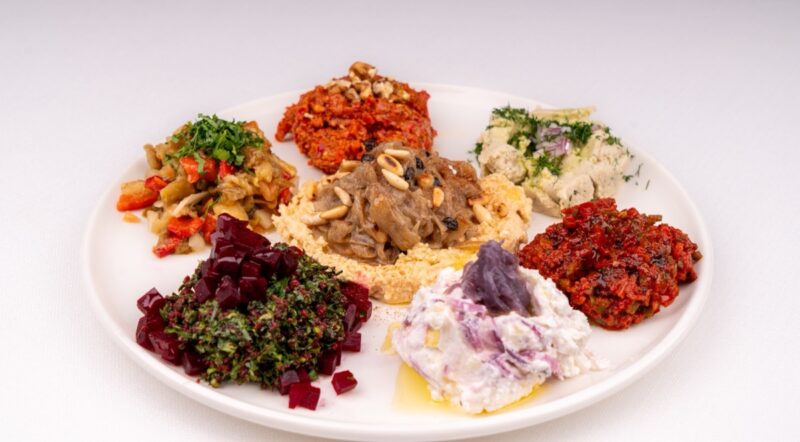
If you want to understand how a Turkish table is built, start with the meze plates. Served in small copper bowls before the main course, these dishes are not simply an appetizer; they set the rhythm of the conversation and turn the table into shared ground. At Nuz Restaurant, in the heart of Sultanahmet, the same ritual repeats every evening: the bowls arrive first, the conversation opens, and the main course takes its time.
In this guide we cover the origin of the word meze, its place in Anatolian cuisine, the cold starters on the Nuz menu, and how a well-balanced meze table is assembled. The aim is to explain what those first plates really mean when you plan dinner in Istanbul.
What Is Meze? The Origin of the Word and the Tradition
The word meze comes from the Persian “mazze”, meaning taste or relish. Its journey was never limited to a single geography; from the Balkans to the Caucasus, from the Aegean to Mesopotamia, it became the name of a shared habit at the table. The common thread is always the same: small portions, plates passed around, and a deliberately slowed-down pace of eating.
A meze plate is the most honest mirror of a kitchen. There is nowhere to hide in a meze: the quality of the pepper, the freshness of the walnut and the character of the olive oil are tasted directly. This transparency, which long cooking times cannot cover up, is the first thing that separates a serious kitchen from an ordinary one. That is exactly why the mezes at Nuz are prepared during the day and rested until shortly before service.
The Place of Meze in Anatolian Cuisine
Anatolia is one of the richest regions in the world in terms of products with geographical indications. Kars gruyere, Erzincan tulum, Divle Obruk cheese, Antep pistachio, Maras pepper, Gaziantep walnut and many more. Most of these products appear not in the main course but in the opening plates. In Anatolia, therefore, meze is not the leftover section of a kitchen; it is the part where regional identity is displayed most intensely.
The culinary approach at Nuz Restaurant rests on the same heritage. Drawing on ancient Mesopotamian and Anatolian gastronomy, the menu brings mezes to the table with a modern presentation. The restaurant also bakes its own bread from wheat grown with heirloom seeds and without additives, which is part of the same philosophy: a good meze is only as good as the bread beside it.
What Is on the Meze Plate at Nuz?
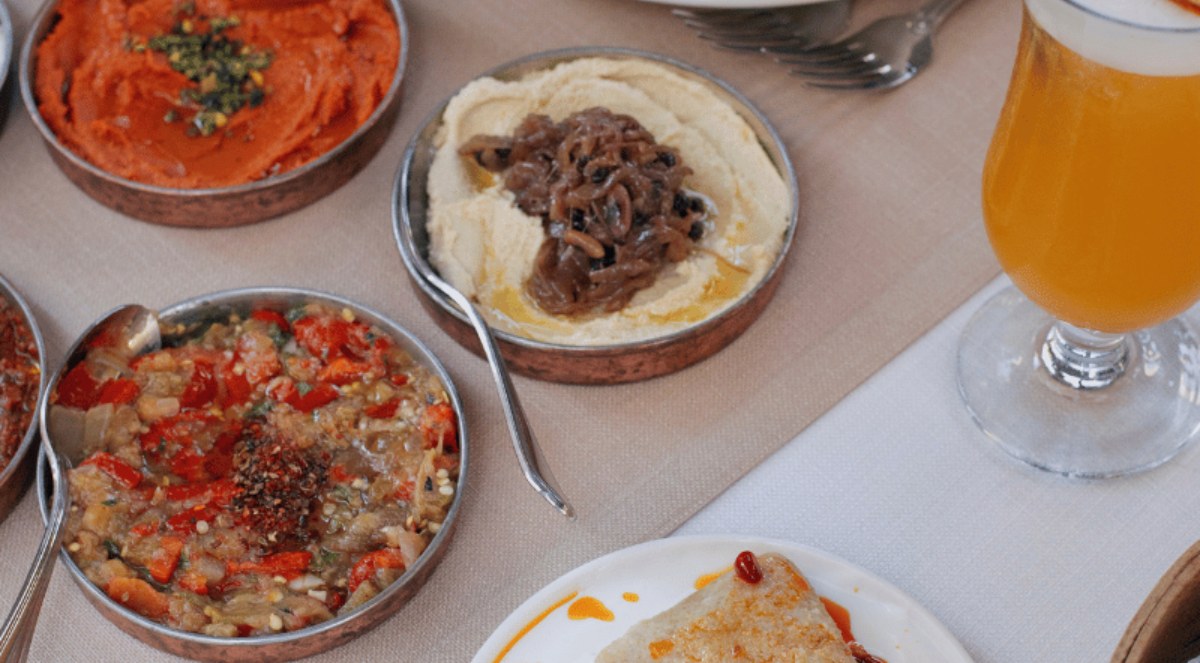
The cold starters section at Nuz combines the classic understanding of meze with lesser-known Anatolian flavours. Here are the mezes on the menu and their characters.
Muhammara
Made with red peppers, roasted chickpea powder, walnuts, garlic and tomato, muhammara is one of the most intensely aromatic members of the Nuz meze plate. The richness of the walnut and the sweet-hot balance of the pepper set the tone of the table when eaten with bread.
Hot Paste (Acili Ezme)
Prepared with kapya peppers, village peppers, tomato, dried onion, lemon and garlic, hot paste is the most widely preferred meze alongside grilled meats in Turkey. At Nuz the heat level is calibrated so that it never overwhelms the flavour of the meat that follows.
Tabbouleh
Made with beetroot, parsley, fig, fine bulgur and pomegranate molasses, this tabbouleh steps outside the classic recipe. The earthiness of the beetroot and the sweetness of the fig are balanced by the acidity of the pomegranate, making it a refreshing pause after heavier mezes.
Topik
Made with chickpeas, caramelised onion and tahini, topik is a classic of Istanbul’s Armenian cuisine that is missing from most menus today. The sweetness of the caramelised onion meets the density of the tahini, finished with a drizzle of olive oil.
Mutabbal and Babagannush
Both are built on roasted eggplant, yet their characters differ. Mutabbal gains a creamy texture from tahini, strained yoghurt, garlic and lemon juice, while babagannush is chunkier and livelier with tomato, kapya pepper, green pepper and pomegranate molasses. Trying both at the same table shows just how differently roasted eggplant can be interpreted.
Cercerun
Made with salted yoghurt and red onion, cercerun is the simplest yet most distinctive meze on the list. Among the spicy plates it takes on the job of cooling the palate.
Cold Starters: Cheese and Charcuterie Plates
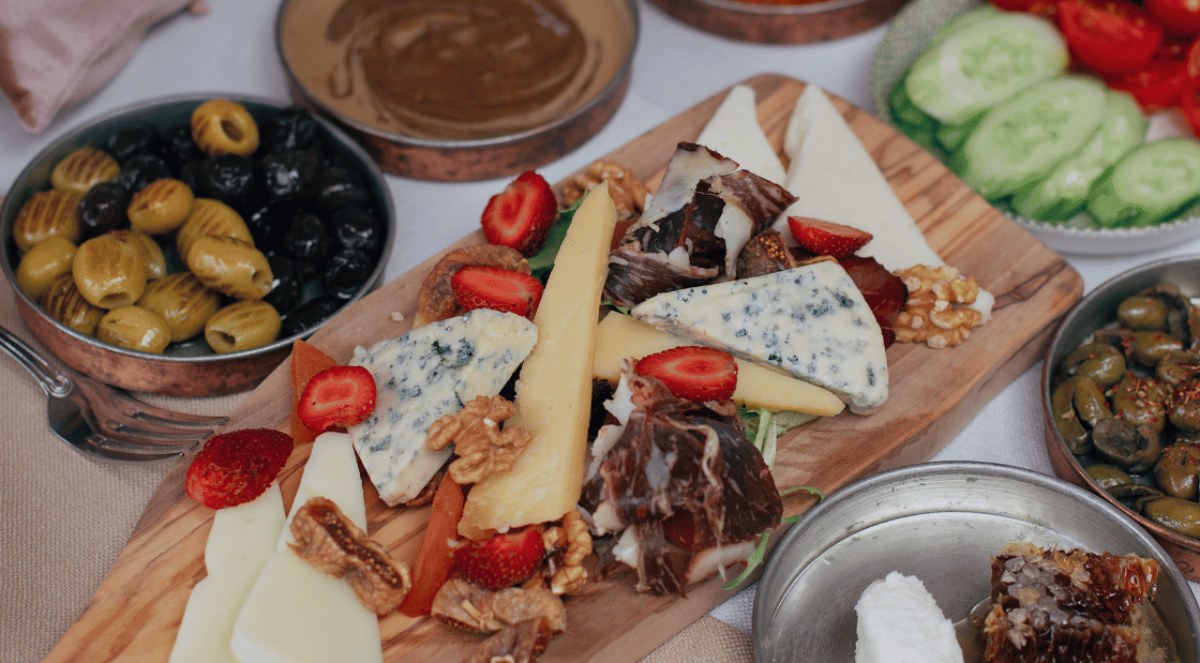
A meze table should not be limited to bowls. The Anatolian Cheese Plate in the cold starters section of Nuz brings together Divle Obruk, Bergama tulum and Kars gruyere. These three cheeses come from very different production traditions: a blue cheese matured inside the Obruk cave, the tulum tradition of the Aegean, and the gruyere of Kars shaped by Swiss influence.
The Anatolian Charcuterie Plate, meanwhile, gathers smoked meat, cured pastirma and black grapes on the same board. The cemen crust of the pastirma and the sweetness of the grapes establish the salty-sweet balance of the meze table. There is also the beef carpaccio: served with capers, mustard, arugula, aged kashkaval and truffle sauce, it is the cold-starter answer to the meat-focused identity of Nuz.
How to Build a Meze Table: Order and Balance
A good meze table follows a few unwritten rules. The first is balance: a yoghurt-based meze, a spicy one, a vegetable-based one and one built on tahini or legumes should share the same table. The five-piece mix appetizers plate at Nuz is composed with exactly this logic.
The second is temperature. Mezes should not be served straight from the fridge but after resting for a few minutes, because cold service mutes the aroma of the olive oil and the spices. The third is portion size: the goal of a meze is not to fill you up but to prepare the palate for the main course. The 120 to 180 gram portions at Nuz respect that measure.
The fourth rule concerns bread. Meze is eaten with bread rather than a spoon, so the texture of the bread is part of the taste itself. The bread baked in the Nuz kitchen is sturdy enough to carry a meze yet light enough not to mask it.
What Goes Well with Meze?
A meze table usually leads into grilled meats. At Nuz that transition is often made with lamb chops, dry-aged ribeye or the Nuz Kebab. The weight of the meat is balanced by the acidic, refreshing character of the mezes. If you are curious about the place of meat on this table, take a look at our guide to finding the best meat restaurant in Istanbul. For the details of dry aging and doneness levels, see our steak guide.
Another classic that follows the mezes is kofte. You can read the story of this timeless dish of Turkish cuisine and its interpretation at Nuz in our article on Turkish meatballs in Sultanahmet.
On the drinks side the classic companion is raki, but the Nuz drink list also offers non-alcoholic alternatives such as ayran, salgam, freshly squeezed orange juice and lemonade. Ayran in particular works well next to intense mezes like hot paste and muhammara.
Meze in Sultanahmet: The Garden at Nuz
The best thing about a meze table is that it lasts. That makes the comfort of the venue directly important. The open garden of Nuz Restaurant in Sultanahmet offers an ideal setting for these long tables, especially in spring and autumn. Its location within walking distance of Hagia Sophia and the Blue Mosque makes it a natural stop for guests exploring the historic peninsula during the day.
If you would like to know more about the garden, see our article on the garden restaurant experience in Sultanahmet. And if you prefer to open the day with breakfast, our guide to the best Turkish breakfast in Istanbul is a good starting point.
Frequently Asked Questions
How many mezes are there at Nuz Restaurant?
The menu features seven cold mezes: muhammara, hot paste, tabbouleh, cercerun, topik, mutabbal and babagannush. There is also a mix appetizers plate that brings five of them together.
Are there vegetarian meze options?
Yes. Muhammara, hot paste, tabbouleh, topik, mutabbal and babagannush are plant-based, while cercerun contains dairy. Vegetarian guests can continue with main dishes such as the creamy grain dish with mushrooms, three-cheese ravioli or haluj.
How many people does a meze portion serve?
Individual mezes range from 120 to 180 grams and the mix appetizers plate is 300 grams. For two people three or four mezes work well; for four people the mix plate plus two individual mezes makes a balanced opening.
Do I need a reservation?
We recommend booking, especially on weekend evenings and during the busy summer months in the garden. A dinner that begins with meze usually runs beyond two hours, so planning the table makes life easier for everyone.
Conclusion
Meze is both the most modest and the most expressive part of an Anatolian table. Served in small bowls, these plates reveal the quality of the produce, the patience of the kitchen and the respect paid to regional heritage all at once. The meze plate at Nuz Restaurant is built on that understanding: Anatolian products with geographical indications, additive-free house bread and an unhurried style of service.
If you are planning dinner in Sultanahmet, we suggest opening your table with meze. The flavour of the grills that follow, and the length of the conversation, are both decided by those first plates. And if you would like to try a different route, have a look at our article on the Sultanahmet burger restaurant experience at Nuz.
