


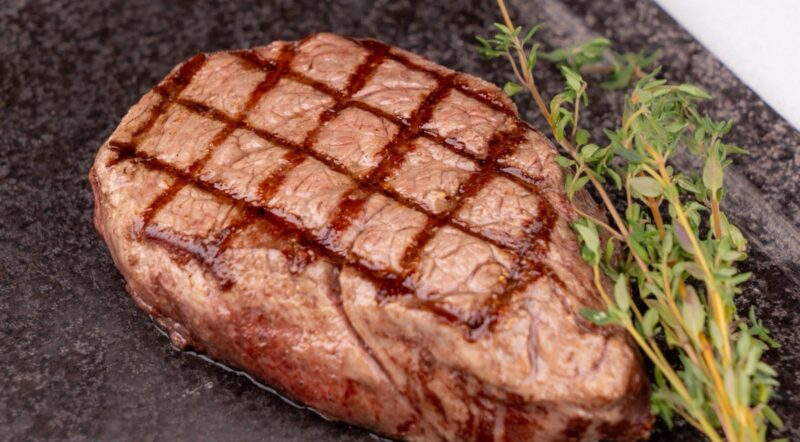
A good steak is not just a piece of meat thrown on the grill. It is the result of a long chain that runs from how the animal was raised to how long the meat rested after slaughter, from the cut it came from to the temperature of the grill, and even to the few minutes it spends on the plate before service. In the kitchen of Nuz Restaurant in Sultanahmet every link in that chain is followed separately, because the dry-aged meats on the menu are flavours that cannot be reached by shortcuts.
In this guide we explain what dry aging really is, what steak doneness levels actually mean, how the cuts on the Nuz menu differ from one another, and how to get the most out of the plate that arrives at your table.
What Is a Steak? What Makes a Cut a Steak?
In its simplest definition, a steak is a slice of meat cut across the muscle fibres and prepared to be cooked at high heat on a grill or in a pan. In kitchen language, however, the word steak means more than that: the cut must have a certain thickness, it must meet a surface hot enough to build a caramelised crust, and its internal temperature must be managed under control.
For a cut to be served as a steak, marbling, meaning the distribution of fat inside the muscle, must also be sufficient. Those fine veins of fat melt during cooking and baste the meat from the inside. The difference between a lean fillet and a well-marbled ribeye comes precisely from there. That is why the Nuz menu offers both a fillet for those who prefer a lean, tender texture and a ribeye for those looking for intense aroma.
What Is Dry-Aged Meat?
Aging is the process of keeping meat for a set period after slaughter in special rooms with controlled temperature, humidity and air flow. Two things happen during this time. First, the water inside the meat slowly evaporates and the flavour concentrates. Second, the meat’s own enzymes begin to break down the muscle fibres and connective tissue, which tenderises it noticeably.
In dry aging the meat rests uncovered and forms a crust. As the period lengthens, a nutty, almost cheese-like aroma develops. The 45 days dry-aged sauteed beef on the Nuz menu is one of the clearest examples of that process. The dry-aged ribeye, on the other hand, offers a more balanced profile: a steak that has gained character while still keeping the classic ribeye taste.
The cost of aging is loss. A significant share of the weight disappears through water loss and crust trimming. That is why dry-aged meat is not found on every menu; it demands space, patience and expense alike.
The Dry-Aged and Steak Menu at Nuz
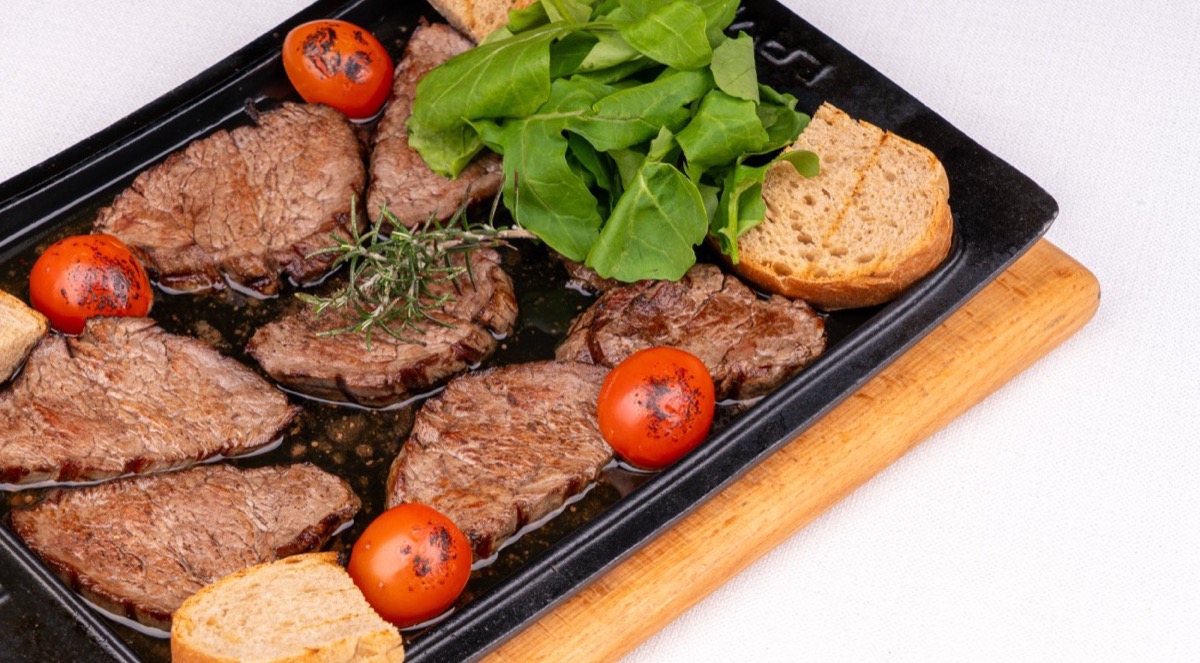
The main dishes section of Nuz Restaurant combines the Anatolian grilling tradition with a modern steak approach. Here are the highlights.
Dry-Aged Ribeye
This 350 gram portion is the classic result of the aging process. Thanks to its marbling it cooks in its own fat on the grill; the outside forms a distinct crust while the inside stays juicy. It is the most balanced starting point for anyone trying dry-aged meat for the first time.
Tomahawk Steak
Served at 800 grams with its long rib bone attached, the tomahawk is the most spectacular steak option on the menu. The bone both balances the heat during cooking and defines the visual impact at service. It is usually shared.
Grilled Beef Fillet and Beef Fillet in Clarified Butter
The fillet comes from the least worked muscle of the animal, so it is naturally tender. The grilled beef fillet is offered as a single 250 gram portion, while the beef fillet in clarified butter arrives as a 450 gram plate for two on a hot cast-iron dish. The second option suits guests who like to share while the meat keeps cooking at the table.
Beef Lokum
The 250 gram beef lokum takes its name from its texture. Grilled in small slices, it suits anyone looking for an easier-to-share presentation instead of one large steak.
Slow-Cooked Beef Rib Tandir and Lamb Rack
Both are long-cooked plates for two or more people. The beef rib tandir is 1,500 grams and the lamb rack 1,100 grams. These are not steaks in the classic sense, but they are the same quality of meat interpreted through different cooking techniques.
Mixed Grill Plate
A plate for two bringing together aged beef chops, meatballs, beef lokum, kushleme and lamb chops. It is a practical choice for getting to know the range of meats on the menu in one sitting.
Steak Doneness Levels: From Rare to Well Done
The Nuz menu devotes a separate page to doneness levels, because choosing the right one matters as much as the quality of the meat. Levels are defined by the core temperature of the cut:
- Rare (50°C): A cool to warm red centre with a soft texture. Lean cuts such as fillet stay noticeably juicy at this level.
- Medium Rare (55°C): A warm red centre and the ideal steak texture. The Nuz menu marks this as the preferred level.
- Medium (60°C): A hot pink centre and a slightly firmer texture. In fatty cuts such as ribeye it lets the fat render fully.
- Medium-Well (65°C): A mostly brown centre and a firm texture.
- Well Done (71°C and above): No colour in the centre, a very firm and drier texture.
The general rule is simple: the leaner the meat, the riskier the higher levels. A fillet asked for well done is likely to dry out, whereas a well-marbled ribeye can stay juicy even at medium. When a dry-aged steak is involved, the range between medium rare and medium brings out the aroma developed during aging most clearly.
How Should a Steak Be Served? Resting and Slicing
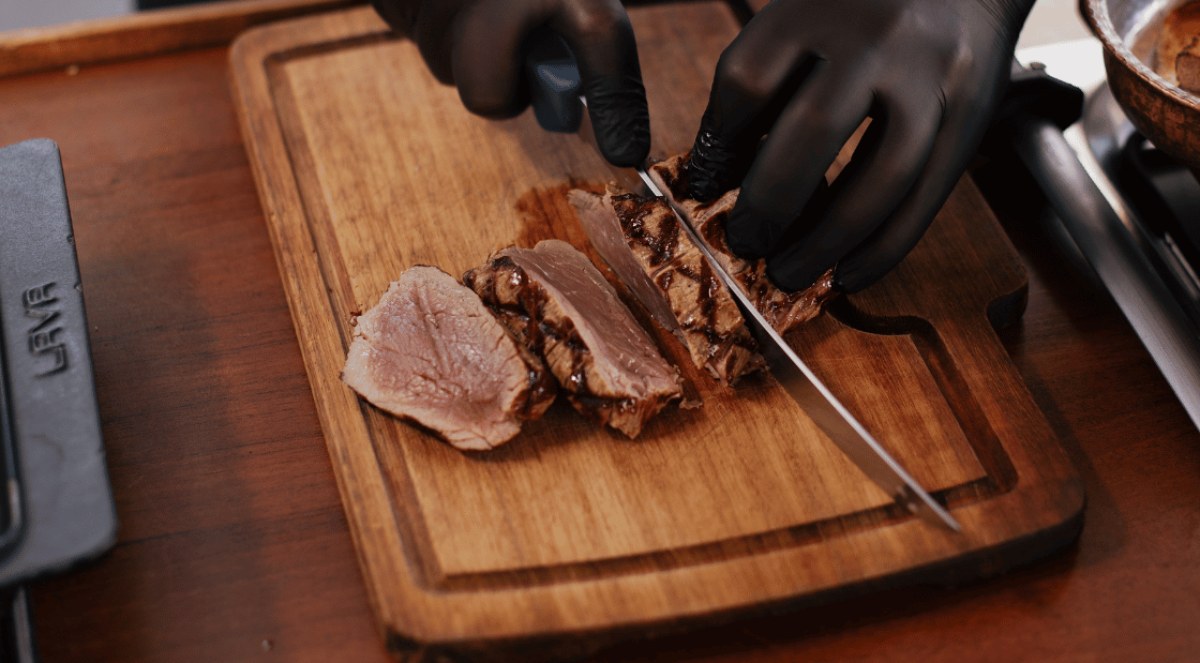
Meat that comes off the grill is never cut straight away. During cooking the muscle fibres contract and the juices gather in the centre; if you cut immediately, those juices run onto the plate. A few minutes of resting lets the juice redistribute through the whole cut. At Nuz this step is a standard part of service.
The direction of slicing matters just as much as resting. Meat is always cut across the grain so that the fibres shorten and chewing becomes far easier. Especially in long-fibred cuts, a steak sliced the wrong way will feel tough even when it has been cooked perfectly.
Which Steak Suits Whom? A Short Selection Guide
If this is your first steak or you prefer lean meat, the grilled beef fillet is the safest choice. If you value the aroma of the meat and enjoy the depth that fat brings, the dry-aged ribeye is the right address. When there is a group at the table, the tomahawk steak or the mixed grill plate works well. For those curious about lamb, the menu offers tender lamb chops and lamb tenderloin.
To see where meat sits in the wider picture of the Nuz kitchen, you can read our article on the search for the best meat restaurant in Istanbul.
What Goes with a Steak?
The side dishes section at Nuz offers grilled baby vegetables, roasted potatoes, creamy spinach and hand-cut french fries. A fatty steak works well with an acidic, refreshing companion, so the arugula salad with aged Kars cheese or the sun dried green salad strikes a good balance.
If you want to build the table from the beginning, the ideal order is to open with cold mezes and then move to the grill. We covered that opening in detail in our article on Anatolian mezes and meze culture. If you are curious about how the same kitchen interprets kofte, read our guide to Turkish meatballs in Sultanahmet. For a more relaxed lunch plan, our article on the Sultanahmet burger restaurant at Nuz will point the way.
Frequently Asked Questions
Is dry-aged meat spoiled meat?
No. Aging is a planned maturation process carried out in special rooms with controlled temperature and humidity. The crust that forms on the outside is trimmed away completely before service; what reaches the table is only the matured inner meat.
Which steak doneness should I choose?
When in doubt, start with medium rare. The Nuz menu also marks it as the preferred level. If you find the texture too pink, you can try medium on your next visit.
How many people does a tomahawk steak serve?
The 800 gram tomahawk is usually shared by two. With a salad and a hot side added, it makes a complete main course for two people.
What is available for vegetarian guests?
The menu includes vegetarian main dishes such as haluj, the creamy grain dish with mushrooms, three-cheese ravioli and pasta with fresh tomato sauce, so a mixed group can eat comfortably at the same table.
Do I need a reservation?
For plates that need long preparation, such as the tomahawk and the beef rib tandir, we suggest mentioning it when you book. The garden fills up quickly on weekend evenings.
Conclusion
The three factors that decide the taste of a steak are the quality of the meat, the aging process and the correct doneness. When those three come together there is no need for sauces, complex techniques or elaborate presentation; salt, fire and patience are enough. The meat menu at Nuz Restaurant is built on exactly that simplicity.
If you are planning dinner in Sultanahmet, opening the table with mezes and continuing with a dry-aged steak makes a balanced route. For a long conversation in the garden afterwards, take a look at our article on the garden restaurant experience in Sultanahmet.
